
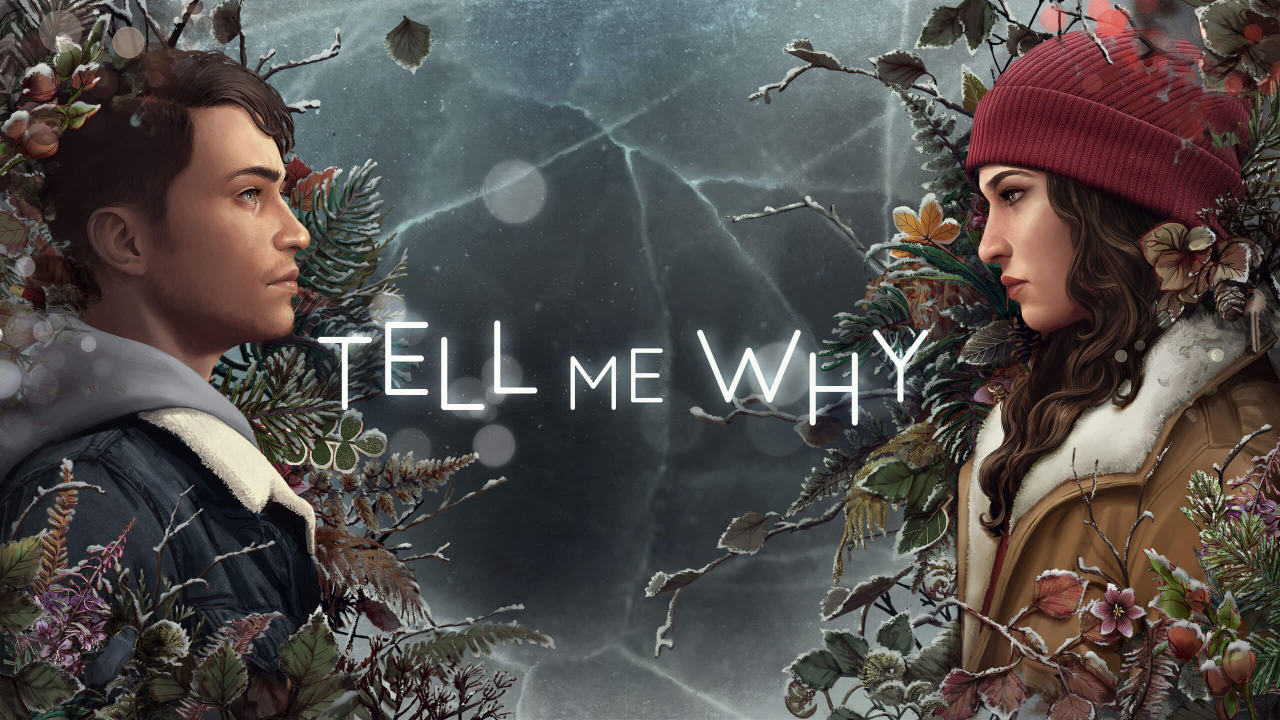
Tell Me Why is not DONTNOD’s best work and doesn’t pack the emotional punch with the same loveable cast as games like Life is Strange but is still an all-round enjoyable experience. Set in a small town in Alaska, the game tells an interesting story about the relationship between two twins as they retrace their past in an attempt to better understand the secrets they left there ten years ago.
Graphics:
The game looks good. Lighting is pretty and textures are detailed and sharp. It is sort of a merge between the artistic style of Life is Strange and a more photorealistic presentation of Alaska, but it looks lovely. Characters are detailed, environments look natural, distance is rendered well, clothing and hair is affected by physics, and small details such as footsteps in the snow or marks on glass only help to make the world feel more real still. I really enjoyed how this game looked.
Audio:
The game audio is fine as far as atmosphere is concerned. The town feels like a small, quit place in cold Alaska and has a very ambient silence about it, for the most part, leaving way for the gentle tread of boots in the snow, or the breeze in the air. The game does not feel empty by any means and sounds are done well, but minimal but in a way that feels natural and immersive.
Voice acting okay. While the lines are delivered clearly and are easy enough to understand, they sometimes feel lacking in passion. I couldn’t always feel an emotion I knew was supposed to be conveyed and while it wasn’t in any way cringy or awkward, it left me feeling that the voice acting was only “okay”, and not exceptional. I didn’t feel like this hampered the story too badly, but in part, is perhaps one of a few reasons why I didn’t really take to the characters like I did with those in Life is Strange.
Music was something I hardly noticed in the game. It is employed on occasion and does an okay job of enhancing the mood in whatever way was intended given the context of the scene, but it didn’t ever work to really put me there. In Life is Strange, it made moments memorable. When Max puts her earphones in leaving Mr. Jefferson’s classroom as she walks down the high-school corridor, it just somehow put you there with her as she went into her own headspace and you were invited to follow. Tell Me Why just doesn’t do this, and consequently whatever music was used ended up being forgettable.
The Story of Tell Me Why: [Spoiler Free]
The story focuses on two twins who return home after some years apart and begin trying to explore a rather secretive past in pursuit of something they’ve long-been starved of: truth. Set in a small Alaskan town, an ‘everybody knows everybody’ kind of place, the game sets the scene well and introduces a cast that feel real, right down to the shop owner who looks like a younger Walter White from Breaking Bad. The world building was good, and the location has a community feeling about it.
The story is generally told well though dialogue with NPCs, and cutscenes. It tells an original tale that is rarely (if ever) tackled in videogames and exposes a past of great intrigue as you see it in its light, and its darkness. The backstory to the twin protagonists feels strong and compelling, but the game is somewhat marred by their presentation in the present.
I didn’t feel as if I particularly cared about them, as they both seem to waver in their resolve to truly learn about their past and fall out over silly things or in a manner that felt more like staged melodrama, which is really amplified how quickly they forgive each other for it. I feel like Tyler was too demanding in his expectations at times and dismissive of others’ feelings, and his perceived insensitivity made me struggle to like him.
I also disliked that the backstory from when the twins were younger that they created with their Mum (in which they were her ‘Goblins’) was over-relied on in the present day and although done cleverly, it bored me a little. It felt more like the meal than the seasoning, so to speak. I hoped it would be like Max and Chloe’s journal where it provided nice context, but I didn’t have to consult it all the time if I didn’t want to because the story was told from beyond it.
I wanted the narrative to unfold from the present as they learned about the past, but it felt a bit like they’d already written it and so we had to keep referencing their childhood stories for answers. This left me confused too, as that part of the game felt decidedly childish, but some of the themes the game touches on – although not disturbingly – are too mature for young children. I did appreciate that these ‘heavier themes’ weren’t forced down our throats though. They added a sense of realism to the characters and were used sparingly, which served to make them more credible.
Choices are presented to you as memories, and the twins have differing ideas on what happened. Making one choice tightens their bond, and another one breaks it. I get the intention to give the choices weight, but I didn’t like this execution. We don’t know who is right, but the game implicitly seems to force us to ‘admit’ that someone is by blackmailing us with the feelings of the other character in a way that feels forced. I’d have preferred my choices to play out in the future, like they do in Life is Strange – that felt more organic.
Gameplay:
The gameplay is nothing special. Camera and character movement feels a little clunky at times but it’s fine. The animations for characters as they interact with the world do feel a lot more polished than they ever did in Life is Strange (Before the Storm) though, which was nice.
The camera controls a bit differently to the Life is Strange games though. While moving around the world is still done from 3rd person, when there are points of interest that you interact with, the camera is changed to a fixed position that gives you a better view (usually) of what’s going on. You then move the camera’s view to interact with things of interest in that scene. At first, I liked this, but it can also be a bit of a nuisance to line the camera up correctly with the object you want to interact with, as there’s a very small circle that has to be ‘in focus’ for this.
What I Liked About Tell Me Why
- Graphics are pretty.
- World has larger scenes compared with Life is Strange.
- Atmosphere of Alaska captured well.
- Audio is generally good.
- Story is original, engaging and handles some heavy topics in a respectful way.
- ‘Collector’ mode for missed achievements and in-game collectibles.
What I Disliked About Tell Me Why
- Choices don’t often feel very meaningful, with few consequences, if any.
- Voice acting can sometimes feel a bit emotionless.
- Characters don’t feel as deep or likeable as in Life is Strange games.
- Can’t get all achievements in one playthrough but wouldn’t really want to replay it.
- Quite steeply overpriced.
Conclusion and Final Thoughts
Overall, this is a game I would recommend playing. I don’t think the story or the characters are as emotional as those of Life is Strange but it is still both emotional and interesting. It handles some heavy topics rather respectfully, I feel, and feels very contemporary with its emphasis on themes around mental health and gender identity. I would say that you should wait for a sale, though. It only offers about ten hours of gameplay if you interact with as much as you can in the world and don’t bother to replay it for the missed achievements, so its full price does feel quite steep.